Best Gazebo for California Wind and Sun (Santa Anas, Coastal Gusts, Valley Heat)
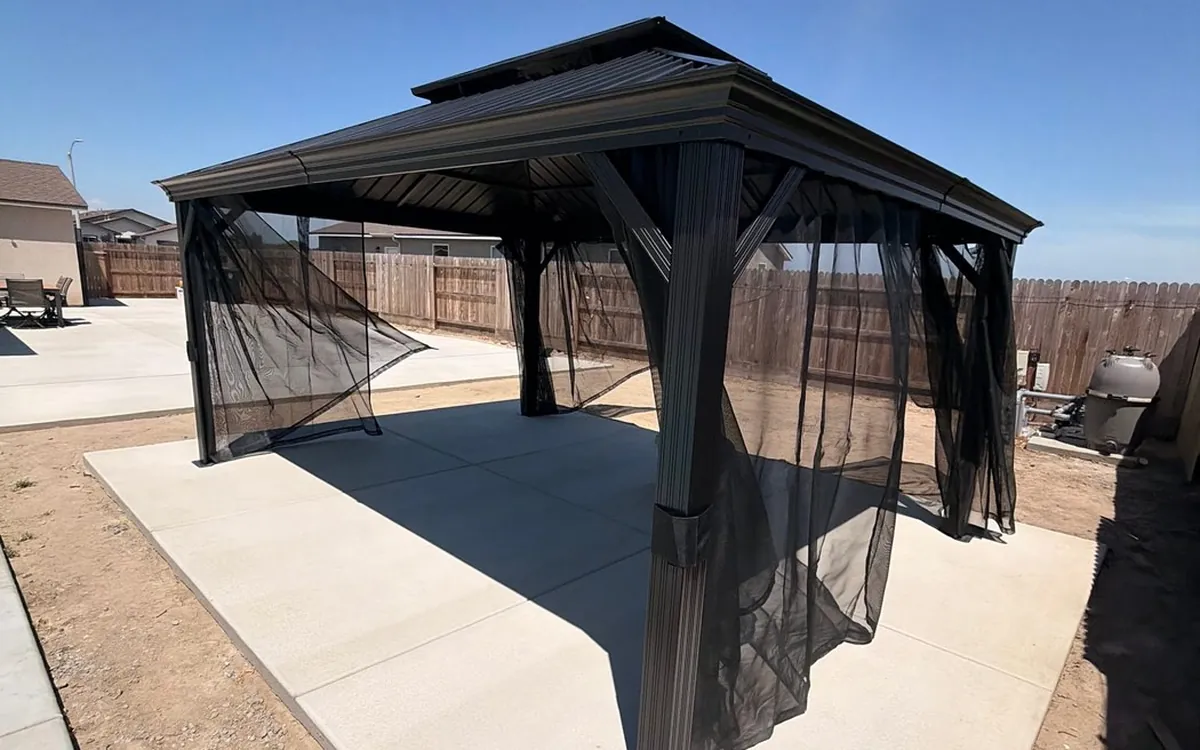
Wind came up 23 times in our records and anchoring 176 times; our own job notes say "anchoring for California wind conditions." The gazebo that survives wind is the one that is anchored, with a vented double roof so gusts pass through instead of lifting it. For sun, an aluminum frame and a light-colored roof run cooler and never rust. Picks: Purple Leaf double-roof aluminum, Sojag Messina steel roof, Yardistry cedar for mass, Paragon aluminum for the coast.
Why listen to us: Zomg The Handyman crews have assembled 2,500+ gazebos across all of California, years of work that predates our current booking system. Since April 2026 alone that system logged 45 completed gazebo, pergola and canopy assemblies in 30 California cities and 129 written gazebo and pergola quotes, and those recent job sheets are the numbers quoted in these guides. We are not reviewing boxes we have never opened. Everything below comes from kits our crews stood up, squared and anchored, or from what customers asked us before buying. This year's completed gazebo jobs include Yucca Valley, Redlands, Rancho Cucamonga, Simi Valley and Oxnard, which is Santa Ana, high-desert and coastal wind country, and our crews anchored every one.
Quick Comparison
| Pick | Best For | Price Tier |
|---|---|---|
| Best for Wind (Overall) | Purple Leaf 12x16 Hardtop Gazebo (aluminum frame, vented double roof) | Mid tier |
| Best Steel Roof for Wind | Sojag Messina 12x16 Hardtop Gazebo (galvanized steel roof) | Value tier |
| Best Mass (Inland Heat and Wind) | Yardistry 12x14 Cedar Gazebo with Aluminum Roof | Premium tier |
| Best Coastal (Salt Air) | Paragon Outdoor Santa Monica 12x12 Aluminum Gazebo | Premium tier |
Our Picks
What Wind Actually Does to a Gazebo
It does not push the gazebo over. It lifts the roof. Air gets under the panels, the roof becomes a wing, and the posts come out of the ground or the base plates tear. That is why anchoring is the whole conversation: our records mention anchoring 176 times and wind 23 times, and our crews write "anchoring for wind compliance" on the job sheet by habit. An unanchored hardtop on a windy night ends up in the neighbor's pool.
Two features reduce uplift before you even anchor: a vented double roof (the gap bleeds pressure) and, on pergolas, louvers you can leave open in a storm. Mass helps a little; anchoring helps a lot.
Santa Anas, Sundowners, Delta Breeze, Coastal Gusts
Southern California's Santa Anas and Santa Barbara's sundowners are hot, dry, downslope winds that gust hard for a day or two at a time; inland valleys and foothill cities (Redlands, Rancho Cucamonga, Simi Valley, Yucca Valley, all on our completed list this year) feel them most. The Delta breeze and Central Valley afternoon winds are steadier and cooler. Coastal gusts come with salt. The hardware answer is the same everywhere: anchor into concrete or footings. The material answer changes: aluminum on the coast, anything inland with the coating intact.
Sun and Heat
In Fresno, Bakersfield or Palm Springs the roof is a frying pan by noon. A vented double roof lets heat out; a lighter roof color reflects more; cedar posts stay cooler to the touch than metal. A gazebo ceiling fan is the most requested add-on after lights (fans came up in several of our records) and it needs a post or a beam rated for the mount, which the cedar kits have and most aluminum kits can take with the right bracket. Buy the fan before the crew arrives so the mount goes in while the roof is open.
Anchoring That Holds
On a slab: concrete screw anchors or wedge anchors through every base plate, never two of four. On pavers: core through to the compacted base or pour footings; pavers shift. On soil: poured footings for a hardtop, auger anchors at minimum for a soft top. On a wood deck: through-bolt to joists. Where footings miss the plates: anchoring epoxy and threaded rod. Our anchoring kit guide lists the hardware we carry; gazebo anchoring for California wind goes deeper on technique.
Crew time is the number people get wrong. On the 25 completed jobs with a clean clock-in and clock-out, our crews spent between 2.6 and 10.9 hours on site, median 5.3 hours. 27 of the completed jobs were done by one pro, 9 by two, 4 by three and one by a four-person crew. The big cedar kits and the 12x20-plus louvered pergolas are the ones that get two or three people. A homeowner doing the same kit for the first time should plan on a full weekend with a helper.
Measure Before You Buy (Cuts Returns)
Big outdoor kits are the items most likely to go back, and almost every return we hear about is a fit problem, not a quality problem. Spend ten minutes with a tape before you order. In wind country, note which way the prevailing gusts come from; a privacy wall or curtains on that side turns the gazebo into a sail, so keep the windward side open.
- Roof size is not post size. A "12x14" is the roof. The posts sit inside that line, and the eave sticks out past the posts on every side. Measure the pad for the roof and leave at least 2 to 3 feet of walk-around beyond the roof line so you can mow, open a gate and get the roof panels up on ladders.
- Height clearance. Check eaves, fence tops, the patio cover you already have and tree limbs. One of our jobs was moving a pergola 40 feet across a slab to clear a 10 foot lemon tree with a pergola that only had 7.5 feet of clearance. Measure the highest point of the roof on the spec sheet, then add a foot for the crew to lift panels into place.
- What is under it. Anchoring came up in 176 of the 313 gazebo records we pulled, more than any other topic. A level concrete slab is the easy case. Pavers are not a foundation: they shift, so we drill through to the base or pour footings. Dirt, grass or decomposed granite means poured footings (we did 29 footing conversations in this window). A wood deck means through-bolting to joists, never to the deck boards.
- Is the slab level? Leveling or an uneven pad came up 27 times. Lay a long level or a straight board across the pad in both directions. A slab that drops an inch over 12 feet still works, but tell the crew so they bring shims and a plan.
- Permits and HOA. Many California cities exempt a detached, open-sided structure under 120 square feet (about 10x12) from a building permit, but setbacks from the property line still apply and HOAs can be stricter than the city. Larger units and anything bolted to a slab may need a permit. One customer in the Bay Area needed HOA architectural approval and a no-drill anchor plan before we could start. Read our California gazebo permit guide before you order.
- Delivery reality. These kits arrive on a pallet in many cartons and often get left in the driveway. Plan the path to the backyard: gate width, steps, side-yard width. Hauling the packaging away came up 51 times, so expect a lot of cardboard and foam.
- Wind. Wind was mentioned 23 times, and our own job notes say "anchoring for California wind conditions" because an unanchored roof is a sail. If you live in a Santa Ana, sundowner or coastal gust area, budget for anchoring from day one and lean toward a hardtop with a vented double roof.
Buy It, Then Let Zomg Stand It Up
Our crews assemble any brand you buy, from Amazon, Costco, Home Depot, Lowe's or Wayfair, anywhere in California. Gazebo and pergola assembly starts at $500 in our price book, louvered pergola installation starts at $999, and most finished jobs landed between $650 and $1,900 once anchoring, footings, old-structure takedown or haul-away were added. The crew squares it, levels it, anchors it for wind and takes the packaging away.
More on the service: gazebo assembly, Amazon gazebo assembly, Costco gazebo assembly, and what it costs in our gazebo assembly cost guide. Serving Los Angeles, San Diego, San Jose, Fresno, Sacramento and every city in between.
Need help with this in California?
Zomg The Handyman has assembled 2,500+ gazebos and anchors every one across all of California. Upfront prices, 4.9 rated on Google. Same-day available.
Get a Gazebo Assembly Quote →Frequently Asked Questions
What wind speed can a hardtop gazebo take?
Manufacturer ratings vary and assume proper anchoring. Our rule: anchored into concrete with a vented roof, a hardtop rides out normal Santa Ana events; unanchored, it does not matter what the box says.
Should I take the curtains down in wind?
Yes. Curtains and privacy walls turn the structure into a sail. Keep the windward side open and tie back or remove panels when a wind event is forecast.
Is aluminum or steel better for a windy site?
Either, anchored. Steel is heavier and resists uplift slightly longer; aluminum does not rust where coastal wind carries salt. Anchoring decides the outcome.
Do you anchor gazebos for wind?
Yes, on every job. Anchoring is the most common topic in our records (176 of 313) and our crews bring concrete anchors, epoxy and an SDS hammer drill as standard.
Our service areas: Gazebo Assembly in Los Angeles · Gazebo Assembly in San Diego · Gazebo Assembly in Irvine
Anchoring Hardware for This Size
Yardistry Meridian picks on Amazon
Yardistry leads our records with 64 mentions, most of them Costco kits. The Meridian line is also on Amazon in every size; these are the sizes that fit this page.
As an Amazon Associate we may earn from qualifying purchases. It never changes your price.
Gazebo buying guides from our crews
Written from real California assembly jobs: which sizes and brands people buy, what goes wrong on site, and how to measure so the kit you order is the kit you keep.
- Best 10x10 gazebo
- Best 10x12 gazebo
- Best 12x14 gazebo
- Best 12x16 gazebo
- Best 12x20 and larger
- Hardtop vs soft top, aluminum vs steel vs wood
- Pergola alternatives to a gazebo
- Gazebo anchoring kits
- Netting and curtain replacements
- Gazebos our crews assemble most
- Measure before you buy checklist
Want a pro to handle the Gazebo & Pergola Assembly?
Insured, background-checked Gazebo & Pergola Assembly pros across California. Fastest exact price: send a quote request with photos.
Popular areas: Los Angeles · Riverside · Long Beach · see all cities