Gazebo Anchoring in California: Protecting Against Wind (2026 Guide)
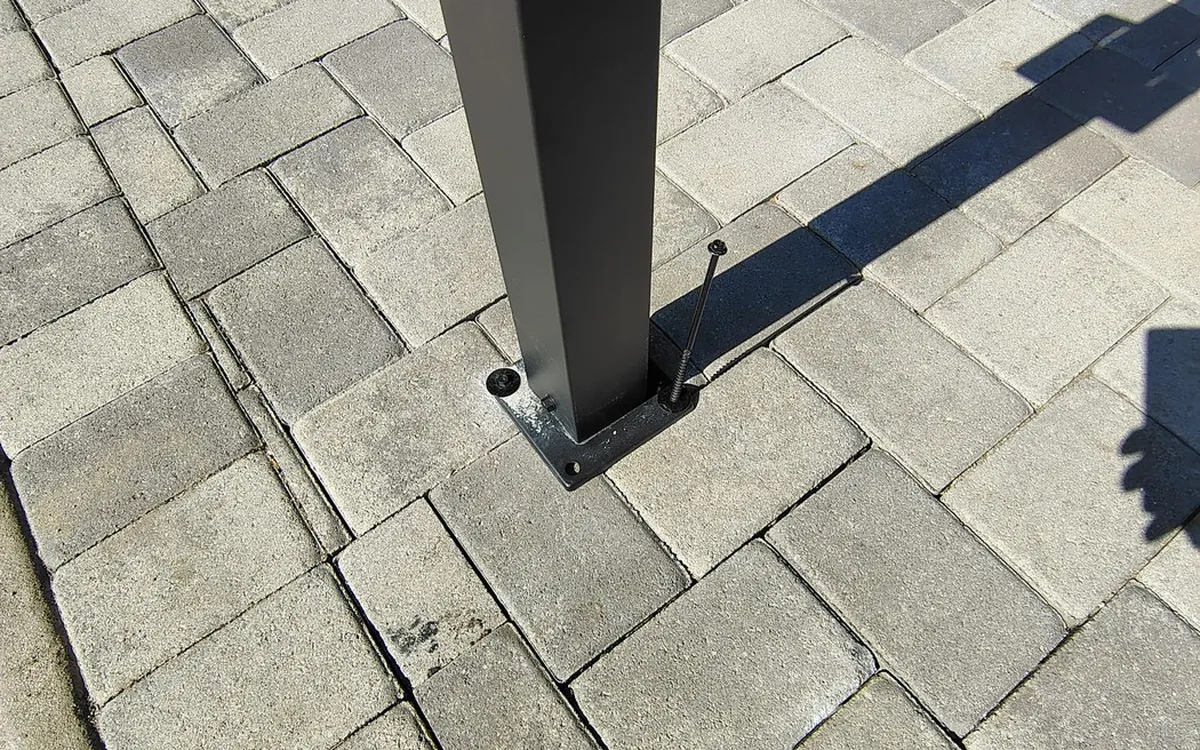
California gazebos must be anchored for wind loads up to 110 mph in coastal and Santa Ana zones. Use 3/8-inch concrete wedge anchors on concrete pads, ground screws on grass, or through-bolts on wood decks. Anchoring is cheap insurance — an unanchored 12x16 gazebo can become a $5,000 flying hazard.
Why California Gazebos Need Special Anchoring
California has three major wind exposure zones:
- Coastal zones (Malibu, Pacifica, Half Moon Bay): sustained ocean winds, rated to 110 mph
- Santa Ana zones (IE, OC, Inland LA, SD mountains): dry gusts 60–90 mph several times a year
- Valley / coastal canyons: localized wind patterns that can exceed rated loads in storms
A 12x16 hardtop gazebo has enough surface area to catch 500–1,000 lbs of wind pressure during a major storm. Without proper anchoring, it becomes projectile debris.
Anchoring by Surface Type
Concrete Pad (best option)
Use 3/8-inch or 1/2-inch stainless steel wedge anchors driven into the concrete with at least 2.5 inches of embedment. Most gazebo manufacturers provide the correct anchor bolts with the kit — use them. If not, Simpson Strong-Tie Titen HD screws are the industry standard.
- Drill with a hammer drill and masonry bit matched to anchor size
- Vacuum the hole before setting the anchor
- Torque to manufacturer spec (typically 30–40 ft-lbs)
- Seal around bolts with silicone to prevent water intrusion
Concrete Pavers (acceptable with caveat)
Pavers alone are NOT sufficient — they're not bonded to the ground. You need either:
- Pour a small concrete pad (18"x18"x6") under each post location
- Remove pavers at post locations, pour concrete footings, reset pavers around them
- Use extra-long ground anchors that pass through the paver into the soil below
Wood Deck
Use 1/2-inch through-bolts with large washers on both top and bottom. The bolt should go through the deck board AND into a joist or ledger below — never just into deck surface.
- Drill through the deck to the joist
- Use a carriage bolt or structural lag bolt with washer
- Tighten until the washer deforms slightly into the wood
- Confirm joist spacing matches gazebo post pattern BEFORE finalizing position
Grass / Dirt (less common, harder)
Use 24-inch to 36-inch auger-style ground anchors screwed into the ground at each post base. This is not as strong as concrete anchoring — expect some wobble in high winds. For permanent grass installs, pour concrete footings.
Compacted Gravel / Stone Pad
Similar to pavers — not ideal by itself. Pour concrete footings at each post location.
California Building Code Considerations
Most California cities don't require a permit for gazebos under 120 square feet (like a 10x12). Larger structures may require:
- Building permit
- Setback verification (distance from property lines)
- Foundation inspection
- HOA approval (if applicable)
The Anchoring Mistakes We See Most Often
1. Skipping anchoring "because it's heavy enough"
A 400-lb gazebo has more than enough wind surface to become airborne in a storm. Weight alone does not anchor a structure. Every gazebo needs mechanical anchoring.
2. Using drywall anchors or masonry sleeves as fake concrete anchors
Wedge anchors and Titen HD screws are the right tools. Sleeve anchors and expansion shields don't have the pull-out strength for wind loads.
3. Driving anchors into cracked concrete
If your concrete pad has cracks, anchors near those cracks will fail under load. Avoid cracks or pour a fresh pad.
4. Through-bolting deck boards without hitting joists
A deck board alone will rip out of the deck in high wind. The bolt must engage the structural joist underneath.
5. Not sealing the anchor hole
Water enters the concrete around the anchor, freezes (yes, even in parts of California), expands, and loosens the anchor over years. Always seal with silicone after setting.
Professional Anchoring Pricing
Every gazebo assembly we do in California includes anchoring as part of the base price. We use:
- Simpson Strong-Tie Titen HD 3/8" screws (concrete)
- Grade 5 through-bolts with oversized washers (wood deck)
- 30-inch auger ground anchors (grass, when pour-in-place isn't feasible)
If you've already built your gazebo and need anchoring added, we offer anchoring-only service starting at $149.
Book Professional Gazebo Anchoring in California
Zomg The Handyman has anchored 500+ gazebos across California — coastal, Santa Ana, valley, and mountain. Book online for full assembly with anchoring included.
Frequently Asked Questions
Do I need to anchor my gazebo in California?
Yes. California wind loads require gazebos to be anchored to concrete, a wood deck joist, or ground anchors. Weight alone is not sufficient — an unanchored gazebo can become airborne in Santa Ana or coastal winds.
What's the best way to anchor a gazebo on concrete?
Use 3/8-inch stainless steel wedge anchors or Simpson Strong-Tie Titen HD screws with 2.5 inches of embedment into the concrete. Most gazebo manufacturers provide these in the kit.
Can I anchor my gazebo to pavers?
Not reliably. Pavers aren't bonded to the ground and shift under load. Either pour concrete footings under post locations or use extra-long ground anchors that reach the soil below.
How much does professional gazebo anchoring cost in California?
Anchoring is typically included with full gazebo assembly (no extra charge). For anchoring-only service on an already-built gazebo, pricing starts at $149.
Gazebo buying guides from our crews
Written from real California assembly jobs: which sizes and brands people buy, what goes wrong on site, and how to measure so the kit you order is the kit you keep.
- Best 10x10 gazebo
- Best 10x12 gazebo
- Best 12x14 gazebo
- Best 12x16 gazebo
- Best 12x20 and larger
- Hardtop vs soft top, aluminum vs steel vs wood
- Best gazebo for California wind and sun
- Pergola alternatives to a gazebo
- Gazebo anchoring kits
- Netting and curtain replacements
- Gazebos our crews assemble most
- Measure before you buy checklist
Get it installed
Want a pro to handle the Gazebo & Pergola Assembly?
Insured, background-checked Gazebo & Pergola Assembly pros across California. Fastest exact price: send a quote request with photos.
Popular areas: Los Angeles · Riverside · Long Beach · see all cities