Hardtop vs Soft Top, Aluminum vs Steel vs Wood: A Gazebo Materials Guide From the Crew
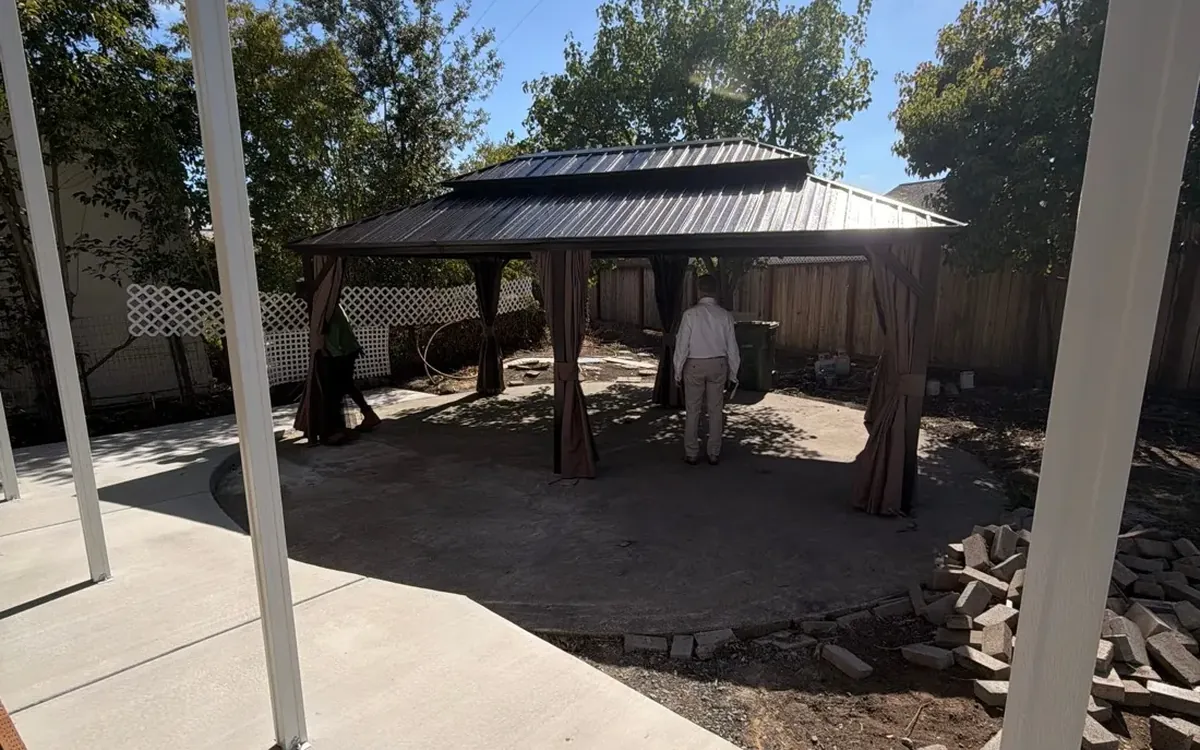
Our records mention hardtops 67 times and soft tops 16 times, and the soft-top conversations are mostly about replacing a canopy. Buy a hardtop unless it is temporary. Frame: aluminum never rusts and is the coastal pick; steel is cheaper and stiffer but needs its coating intact; cedar is the best-looking and the only one that needs yearly care. Roof: galvanized steel panels are quiet and stiff, aluminum panels are lighter, and a vented double roof matters more than the metal.
Why listen to us: Zomg The Handyman crews have assembled 2,500+ gazebos across all of California, years of work that predates our current booking system. Since April 2026 alone that system logged 45 completed gazebo, pergola and canopy assemblies in 30 California cities and 129 written gazebo and pergola quotes, and those recent job sheets are the numbers quoted in these guides. We are not reviewing boxes we have never opened. Everything below comes from kits our crews stood up, squared and anchored, or from what customers asked us before buying. Cedar Yardistry kits, aluminum Purple Leaf and Paragon kits and steel-roof Sojag kits were all on our crews' job sheets this year, so this is a comparison of structures we have had our hands on.
Quick Comparison
| Pick | Best For | Price Tier |
|---|---|---|
| Best Cedar Frame | Yardistry 12x14 Cedar Gazebo with Aluminum Roof | Premium tier |
| Best Aluminum Frame | Purple Leaf 12x16 Aluminum Hardtop Gazebo (double roof) | Mid tier |
| Best Steel Roof | Sojag Messina 12x16 Hardtop Gazebo (galvanized steel roof) | Value tier |
| Best All-Aluminum 12x12 | Paragon Outdoor Santa Monica 12x12 Aluminum Gazebo | Premium tier |
Our Picks
Hardtop vs Soft Top
A soft top is a fabric canopy on a frame. It is cheaper, lighter and faster to build, and California sun chalks and tears it in two to three summers; the zipper and grommets usually go first. A hardtop is metal roof panels on a frame: more parts, heavier, a full day with two people, and a structure that lasts as long as the frame. Hardtops were mentioned 67 times in our records against 16 for soft tops, and replacing a soft-top canopy is one of our most-read pages, which tells you how that story ends.
If you are paying to have it assembled once, put a real roof on it.
Aluminum vs Steel vs Wood Frames
| Frame | Strength | Maintenance | Best for |
|---|---|---|---|
| Aluminum | Light, rigid in extruded profiles, never rusts | None beyond rinsing | Coast, salt air, anyone who wants zero upkeep |
| Steel | Heaviest and stiffest for the money | Coating must stay intact; touch up scratches or it rusts | Inland, budget hardtops, high-wind sites where mass helps |
| Cedar | Very strong in the post sizes these kits use | Stain or seal every 1 to 2 years or it greys and checks | Permanent, furniture-grade look; shade for a fan or heater mount |
On the job the difference is weight. Cedar kits run two or three pros; aluminum kits are often one. Steel frames fall in between but the roof panels are the heavy part regardless of frame.
Roof Panels: Steel, Aluminum or Polycarbonate
Galvanized steel panels are the common hardtop roof: stiff, quiet in rain, and heavy enough to need two people on ladders. Aluminum panels are lighter and rust-proof but ring more in rain. Polycarbonate lets light through and is the lightest, but it yellows and flexes, and we do not see it on the kits customers bring us. More important than the metal is a vented double roof: the gap lets hot air and wind out, which is why every hardtop pick above has one. See our roof material comparison for the long version.
What the Crews See
Steel scratches during assembly. Every steel kit we build gets a few scuffs on the panel edges from handling; touch-up paint in the box or from the hardware aisle keeps rust from starting there. Cedar arrives wet or dry depending on the season and the posts can be a little twisted; squaring the base before the roof goes on takes care of it. Aluminum kits are the easiest to build and the most forgiving of a slightly uneven pad.
Crew time is the number people get wrong. On the 25 completed jobs with a clean clock-in and clock-out, our crews spent between 2.6 and 10.9 hours on site, median 5.3 hours. 27 of the completed jobs were done by one pro, 9 by two, 4 by three and one by a four-person crew. The big cedar kits and the 12x20-plus louvered pergolas are the ones that get two or three people. A homeowner doing the same kit for the first time should plan on a full weekend with a helper.
Measure Before You Buy (Cuts Returns)
Big outdoor kits are the items most likely to go back, and almost every return we hear about is a fit problem, not a quality problem. Spend ten minutes with a tape before you order. Material changes weight, not footprint; measure the same way for all three, but allow extra room around a cedar kit for two ladders.
- Roof size is not post size. A "12x14" is the roof. The posts sit inside that line, and the eave sticks out past the posts on every side. Measure the pad for the roof and leave at least 2 to 3 feet of walk-around beyond the roof line so you can mow, open a gate and get the roof panels up on ladders.
- Height clearance. Check eaves, fence tops, the patio cover you already have and tree limbs. One of our jobs was moving a pergola 40 feet across a slab to clear a 10 foot lemon tree with a pergola that only had 7.5 feet of clearance. Measure the highest point of the roof on the spec sheet, then add a foot for the crew to lift panels into place.
- What is under it. Anchoring came up in 176 of the 313 gazebo records we pulled, more than any other topic. A level concrete slab is the easy case. Pavers are not a foundation: they shift, so we drill through to the base or pour footings. Dirt, grass or decomposed granite means poured footings (we did 29 footing conversations in this window). A wood deck means through-bolting to joists, never to the deck boards.
- Is the slab level? Leveling or an uneven pad came up 27 times. Lay a long level or a straight board across the pad in both directions. A slab that drops an inch over 12 feet still works, but tell the crew so they bring shims and a plan.
- Permits and HOA. Many California cities exempt a detached, open-sided structure under 120 square feet (about 10x12) from a building permit, but setbacks from the property line still apply and HOAs can be stricter than the city. Larger units and anything bolted to a slab may need a permit. One customer in the Bay Area needed HOA architectural approval and a no-drill anchor plan before we could start. Read our California gazebo permit guide before you order.
- Delivery reality. These kits arrive on a pallet in many cartons and often get left in the driveway. Plan the path to the backyard: gate width, steps, side-yard width. Hauling the packaging away came up 51 times, so expect a lot of cardboard and foam.
- Wind. Wind was mentioned 23 times, and our own job notes say "anchoring for California wind conditions" because an unanchored roof is a sail. If you live in a Santa Ana, sundowner or coastal gust area, budget for anchoring from day one and lean toward a hardtop with a vented double roof.
Buy It, Then Let Zomg Stand It Up
Our crews assemble any brand you buy, from Amazon, Costco, Home Depot, Lowe's or Wayfair, anywhere in California. Gazebo and pergola assembly starts at $500 in our price book, louvered pergola installation starts at $999, and most finished jobs landed between $650 and $1,900 once anchoring, footings, old-structure takedown or haul-away were added. The crew squares it, levels it, anchors it for wind and takes the packaging away.
More on the service: gazebo assembly, Amazon gazebo assembly, Costco gazebo assembly, and what it costs in our gazebo assembly cost guide. Serving Los Angeles, San Diego, San Jose, Fresno, Sacramento and every city in between.
Need help with this in California?
Zomg The Handyman has assembled 2,500+ gazebos and anchors every one across all of California. Upfront prices, 4.9 rated on Google. Same-day available.
Get a Gazebo Assembly Quote →Frequently Asked Questions
Is a hardtop gazebo worth it over a soft top?
Yes for anything you plan to keep. Canopies fail in two to three California summers; a hardtop lasts as long as the frame. Our records mention hardtops four times as often as soft tops.
Does an aluminum gazebo rust?
No. Aluminum oxidizes to a dull finish but does not rust. It is the frame we recommend near the ocean.
How often do I seal a cedar gazebo?
Every one to two years with an exterior stain or clear sealer, more often in full sun. Doing the first coat flat before assembly is easiest.
Which is stronger in wind, steel or aluminum?
A properly anchored kit in either metal is fine. Unanchored, the heavier steel kit resists uplift a little longer, but anchoring is what actually keeps a roof on in a Santa Ana.
Our service areas: Gazebo Assembly in Los Angeles · Gazebo Assembly in San Diego · Gazebo Assembly in Irvine
Finish the Job
Yardistry Meridian picks on Amazon
Yardistry leads our records with 64 mentions, most of them Costco kits. The Meridian line is also on Amazon in every size; these are the sizes that fit this page.
As an Amazon Associate we may earn from qualifying purchases. It never changes your price.
Gazebo buying guides from our crews
Written from real California assembly jobs: which sizes and brands people buy, what goes wrong on site, and how to measure so the kit you order is the kit you keep.
- Best 10x10 gazebo
- Best 10x12 gazebo
- Best 12x14 gazebo
- Best 12x16 gazebo
- Best 12x20 and larger
- Best gazebo for California wind and sun
- Pergola alternatives to a gazebo
- Gazebo anchoring kits
- Netting and curtain replacements
- Gazebos our crews assemble most
- Measure before you buy checklist
Want a pro to handle the Gazebo & Pergola Assembly?
Insured, background-checked Gazebo & Pergola Assembly pros across California. Fastest exact price: send a quote request with photos.
Popular areas: Los Angeles · Riverside · Long Beach · see all cities