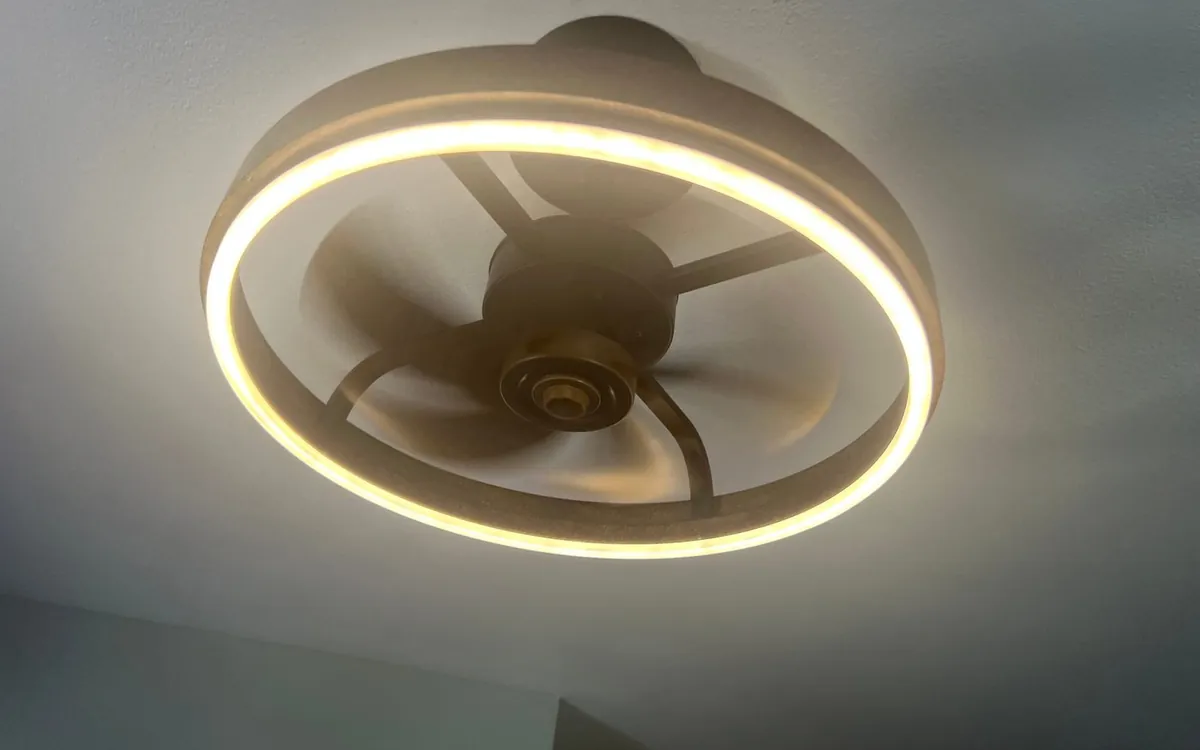
Ceiling fan installation is one of the most requested services we provide. A ceiling fan can reduce your energy bills, improve air circulation, and add style to any room. This guide covers everything you need to know about ceiling fan installation and ceiling fan replacement.
Can I Install a Ceiling Fan Myself?
It depends on your situation:
- Replacing existing fan - Usually DIY-friendly if wiring exists
- Replacing light fixture with fan - May need electrical box upgrade
- New installation (no existing fixture) - Requires new wiring, hire an electrician
Electrical Box Requirements
This is the most critical part of ceiling fan installation. Ceiling fans are heavy and vibrate - they need proper support:
Standard Light Fixture Box
Regular electrical boxes are rated for 50 lbs or less. Most ceiling fans weigh 25-50 lbs, so you might think it's fine. It's not. The vibration from spinning blades can loosen connections over time.
Fan-Rated Electrical Box
Ceiling fans require a box specifically rated for fans, which handles both weight and vibration. Look for boxes labeled "fan-rated" or "ceiling fan support."
Choosing the Right Ceiling Fan Size
Fan size matters for both aesthetics and airflow:
- Up to 75 sq ft (small bedroom/bathroom) - 29-36" fan
- 76-144 sq ft (standard bedroom) - 36-42" fan
- 145-225 sq ft (living room) - 44-50" fan
- 225-400 sq ft (large room) - 50-54" fan
- Over 400 sq ft - Multiple fans or 60"+ fan
Ceiling Fan Installation Steps
For ceiling fan replacement where proper wiring exists:
- Turn off power at the breaker, verify with voltage tester
- Remove old fixture and note wire connections
- Check electrical box - upgrade if not fan-rated
- Install mounting bracket per manufacturer instructions
- Assemble fan motor (usually attach downrod to motor)
- Hang motor on bracket (most have a hook for this)
- Connect wires:
- Black (hot) to black
- White (neutral) to white
- Green/bare (ground) to green/bare
- Blue (light kit) to black or separate switch wire
- Secure motor to bracket
- Attach fan blades
- Install light kit if applicable
- Turn on power and test all speeds and directions
Ceiling Fan Height Guidelines
Proper height ensures safety and optimal airflow:
- Minimum clearance - Fan blades should be at least 7 feet from floor
- Optimal height - 8-9 feet from floor for best airflow
- From ceiling - 10-12 inches below ceiling is ideal
- Low ceilings - Use flush-mount or "hugger" fans
- High ceilings - Use extended downrods (fans work best 8-9' from floor)
Common Ceiling Fan Problems
When you might need ceiling fan repair:
Wobbling
Usually caused by unbalanced blades, loose screws, or warped blades. Try a blade balancing kit before calling for repair.
Noise
Clicking, humming, or grinding can indicate loose parts, motor issues, or improper installation.
Not Working
Check the pull chain, wall switch, and breaker first. If those are fine, the motor or capacitor may need replacement.
Light Flickers
Often caused by loose bulbs, incompatible dimmer switches, or wiring issues.
When to Hire a Professional
Consider professional ceiling fan installation near me services when:
- No existing electrical box at location
- Current box is not fan-rated and needs replacement
- You want a separate switch for light and fan
- The ceiling is very high (needs scaffolding)
- You're not comfortable with electrical work
- The fan is very heavy or large
Ceiling Fan Installation Cost
Professional ceiling fan installation costs vary based on:
- Simple replacement - Fan-to-fan swap, existing wiring
- Light-to-fan conversion - May need electrical box upgrade
- New installation - Requires new wiring, costs more
- High ceilings - Additional equipment and time
At Zomg the Handyman, we offer competitive ceiling fan installation rates with upfront pricing. 📞 Call to Book to see exact pricing for your job.
Need Ceiling Fan Installation?
Our electrical handyman team installs ceiling fans daily across Los Angeles. Safe, fast, and guaranteed.
Book Ceiling Fan Installation →Conclusion
Ceiling fan installation can be a DIY project if you're comfortable with basic electrical work and have an existing fan-rated box. For new installations or if you have any doubts about the electrical setup, hiring a professional ensures safety and proper function.
If you need ceiling fan installation near me in Los Angeles, book with Zomg the Handyman. We handle everything from simple replacements to complex installations, and we guarantee our work.
Want a pro to handle the Ceiling Fan Installation?
Insured, background-checked Ceiling Fan Installation pros across California. Fastest exact price: send a quote request with photos.
Popular areas: Los Angeles · Riverside · Long Beach · see all cities