Gazebo Foundation Ideas: Pavers, Concrete, Deck or Gravel?
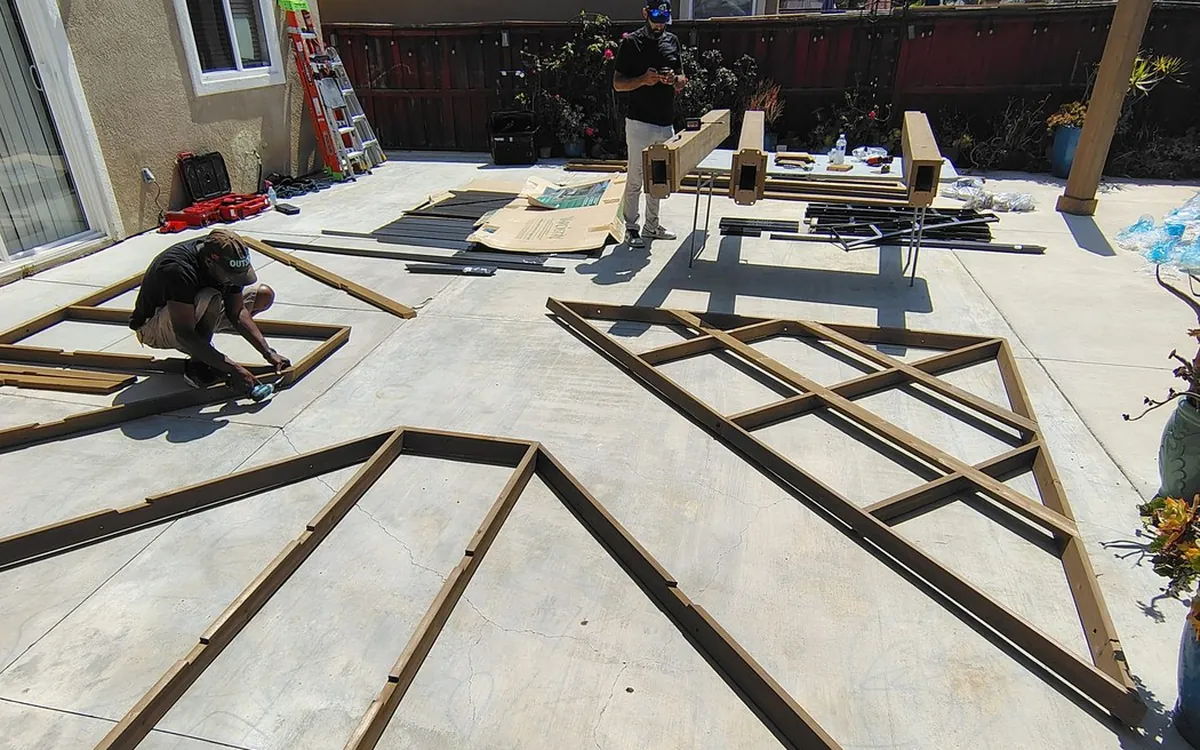
Concrete pad is the strongest gazebo foundation, pavers look best, gravel is cheapest, and a deck works if you bolt into joists. Costs + CA permit rules.
The gazebo is the easy part — you pick one, it shows up in boxes. What's under it decides whether it stays level, stays anchored, and stays put in California wind. We've assembled gazebos on every base there is: fresh slabs, old patios, paver fields, decks, gravel pads, and (against our advice) bare lawn. Here's the honest rundown of each foundation option — what it costs, how you anchor to it, and which one fits your yard and budget.
Quick Comparison
| Pick | Best For | Approx Price |
|---|---|---|
| Best Slab Anchors | Simpson Strong-Tie Titen HD 1/2" Concrete Screw Anchors | $25-$45 |
| Best for Footings | Quikrete Quik-Tube 12" Concrete Form Tubes | $15-$30 each |
| Best for Soft-Tops on Soil | Heavy-Duty Auger Ground Anchor Kit (4-Pack) | $25-$50 |
Our Picks
Match the Foundation to the Gazebo First
Start with what you're putting on it. A soft-top gazebo (fabric canopy, light steel frame) is forgiving — a compacted gravel pad or even firm, level ground with auger anchors will carry it, because the structure weighs 100-200 lb. A hardtop (Sojag, Sunjoy, PURPLE LEAF) is 400-600 lb of aluminum and steel that must be dead level or the roof panels won't seat, and it must bolt down or it becomes a sail. A cedar gazebo (Yardistry) is 800-1,000+ lb of lumber that concentrates real load at four to six posts — it wants concrete under every post, whether that's a full slab or individual footings.
Second question: do you already have a slab or patio? If yes, you may be done — an existing 4" concrete patio in decent shape is the best gazebo foundation there is, and your whole 'foundation budget' becomes $30 in anchors. Everything below assumes you're starting from dirt or working with pavers, a deck, or a budget.
Concrete Pad — the Gold Standard
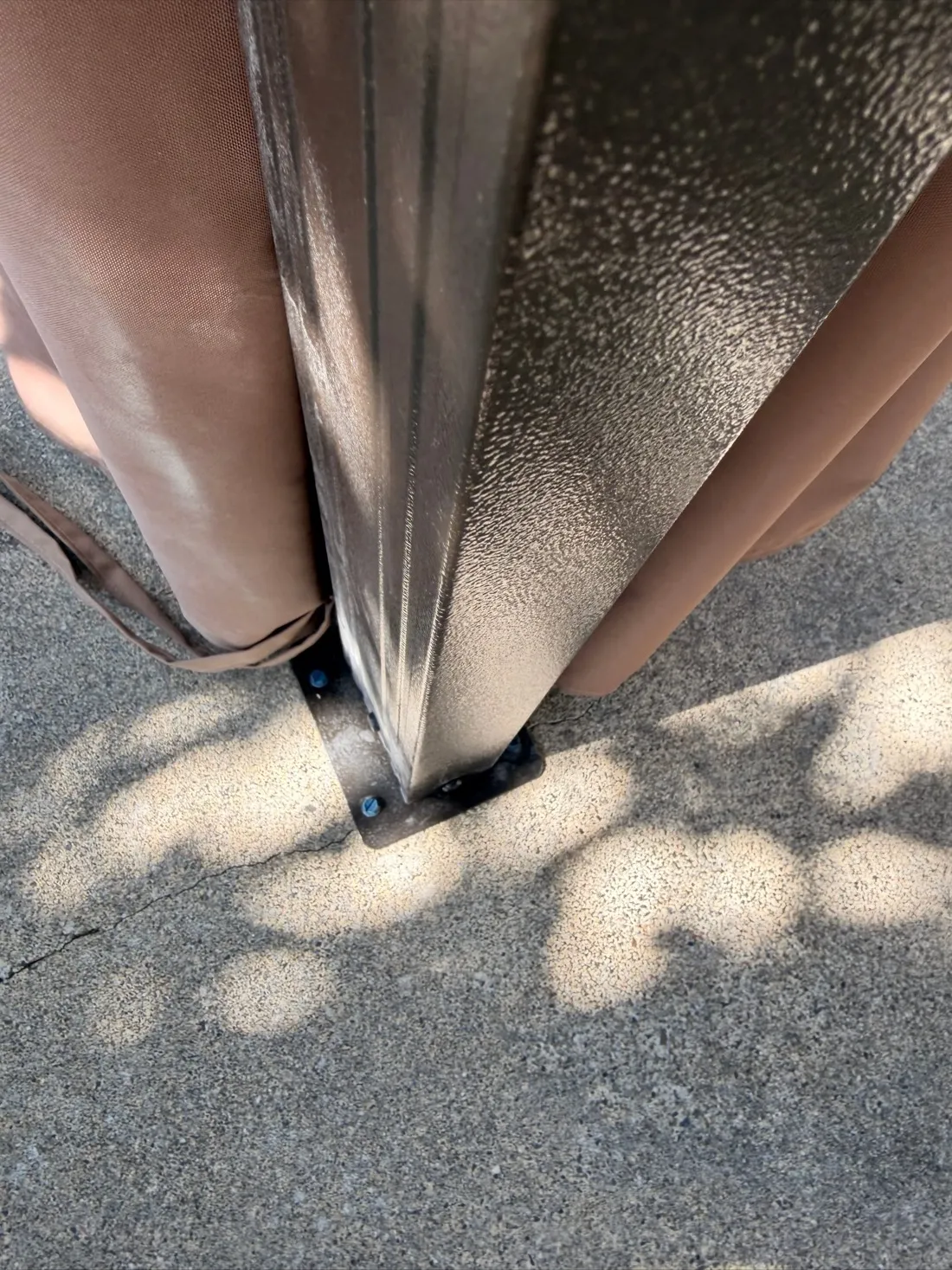
A poured concrete pad is the foundation every gazebo wants: dead level, permanent, and the strongest thing you can anchor to. The spec we recommend for a gazebo pad is 4 inches thick over 4 inches of compacted base, with rebar or wire mesh, finished slightly proud of grade so water sheds away. Size it to the gazebo's actual post footprint plus at least 6 inches of margin on each side — for a 10x12 gazebo that's roughly an 11x13 pad.
Cost in California runs about $8-$15 per square foot professionally poured, so a 10x12-class pad lands around $1,000-$1,800, and a 12x14-class pad around $1,400-$2,500. DIY with rented mixer and forms, materials run $600-$1,000 — but a 120 sq ft pour is a hard first concrete project, and an out-of-level pad haunts you at every step of gazebo assembly.
Anchoring is the easy part: let the pad cure at least 7 days, then drive 1/2" Titen HD screw anchors or wedge anchors through every post base plate, two per post minimum. That connection resists uplift, not just tipping — which is what Santa Ana wind actually tests.
Pavers — Beautiful, but Pavers Are Not an Anchor
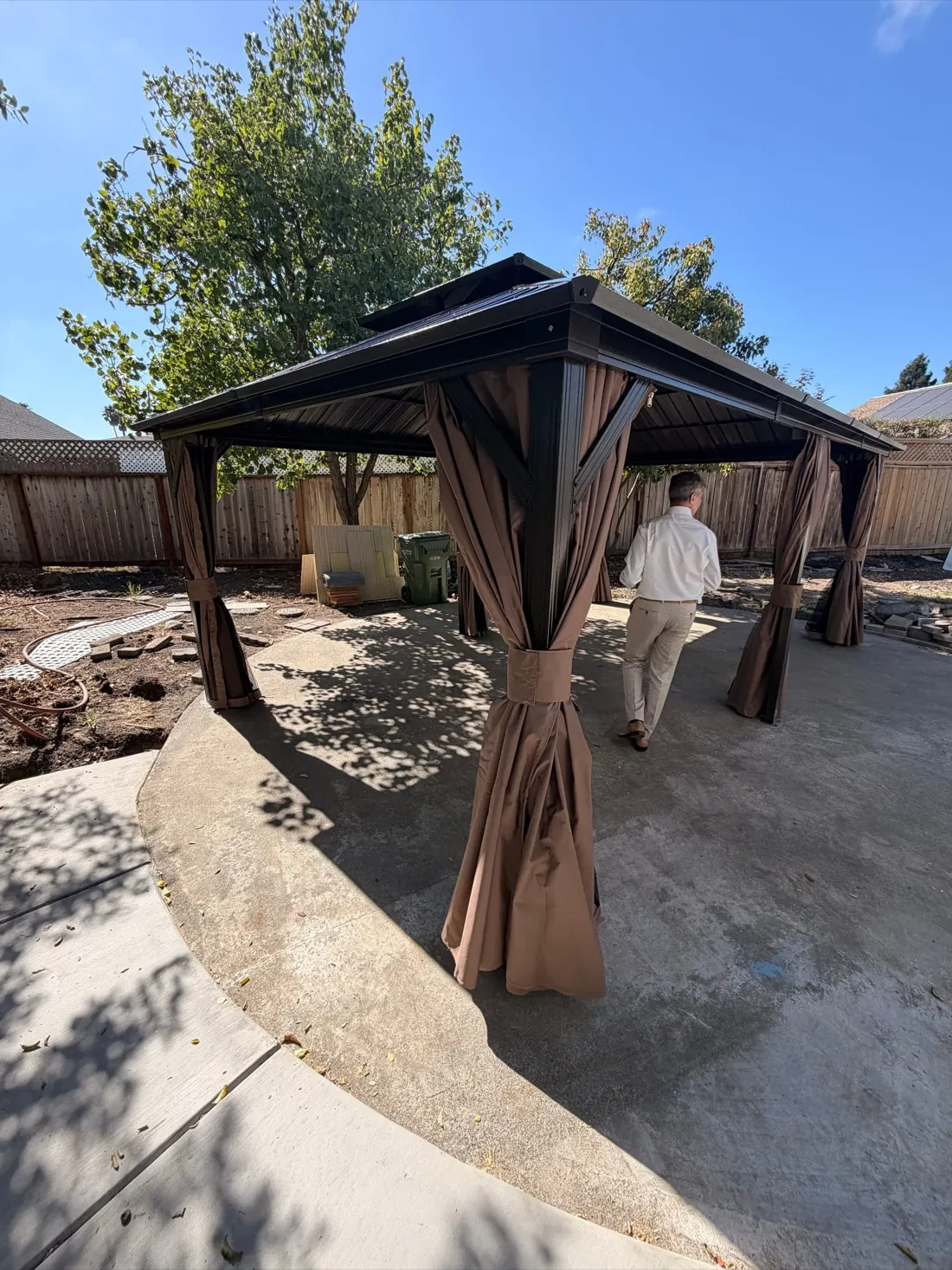
A paver patio under a gazebo looks fantastic, drains well, and costs $12-$25 per square foot installed in California ($4-$8/sq ft in materials if you DIY the digging, screeding, and compacting). Done right — 4-6 inches of compacted Class II road base, an inch of bedding sand, edge restraint — it's plenty flat and stable underfoot.
Here's the part everyone gets wrong: you cannot anchor a gazebo to pavers. Pavers float on sand. A lag or masonry anchor into a single 2-3" paver holds a few hundred pounds at best, and the first real gust either pulls the anchor or lifts the paver with it. We've replaced enough wind-flipped gazebos on gorgeous paver patios to be blunt about this.
The fix is to anchor through the pavers, not to them: either pour a 12" diameter x 18" deep concrete footing at each post location (set before or cored after the paver field goes in) and bolt the posts to those, or cast a small hidden pad under each post position. Plan the post layout before the pavers go down and this is cheap; retrofit coring afterward is doable but messier.
Wood Deck — Fine, If You Bolt Into the Joists
Putting a gazebo on a deck works, and for second-story yards or sloped lots it's sometimes the only flat real estate available. Two rules make it safe.
Rule one: confirm the deck can carry it. A residential deck is typically designed around 40 lb per square foot of live load. A 500 lb hardtop spread across the footprint is fine on a sound deck; a 1,000 lb cedar gazebo whose posts land mid-span between joists is not. Posts should land over joists or over added blocking, and if the deck is old, springy, or has questionable footings, get it evaluated before parking a permanent structure on it.
Rule two: through-bolt to structure, never lag into deck boards. Decking is 1" of softwood — screws into it hold nothing in uplift. We through-bolt each post base plate with carriage bolts into the joists below, adding 2x blocking between joists where the plates don't line up. Building a new deck just to hold a gazebo runs $30-$60 per square foot in California, which is why 'deck as gazebo foundation' usually only makes sense when the deck already exists.
Gravel Pad — the Budget Foundation That Actually Works
A compacted gravel pad is the sleeper pick: $2-$4 per square foot DIY ($4-$7 hired out), a weekend of honest labor, and it drains better than anything else on this list. The build: excavate 4-5 inches, lay commercial landscape fabric so the rock doesn't migrate into the soil, fill with 3/4"-minus crushed rock (Class II base) in two lifts, compacting each with a plate compactor, and contain it with steel or composite edging. Crushed rock with fines locks together when compacted — round pea gravel never does, so don't substitute it.
The catch, as always, is anchoring. Gravel grips nothing. For a soft-top, auger-style ground anchors driven through the gravel into native soil are adequate. For any hardtop or cedar unit, do what we do: set a concrete footing at each post — a 12" form tube, 18" deep, poured flush with the gravel surface with a post base or J-bolt set in the wet concrete. You get slab-quality anchoring at four small points for a fraction of slab cost, which makes gravel-plus-footings the best value foundation for a hardtop on a budget.
Cost Comparison — 10x12 Gazebo (120 Sq Ft)
Real-world California numbers for the same 10x12 footprint:
| Foundation | DIY cost | Pro cost | How you anchor | Best for |
|---|---|---|---|---|
| Existing slab/patio | $30-$60 (anchors) | $150-$400 (we anchor it) | Titen HD / wedge anchors | Everyone who has one |
| New concrete pad | $600-$1,000 | $1,000-$1,800 | Titen HD / wedge anchors | Permanent hardtop or cedar |
| Pavers | $500-$1,000 | $1,500-$3,000 | Footings through the field | Looks-first patios |
| Gravel + post footings | $350-$700 | $700-$1,300 | Poured footings at posts | Best value for hardtops |
| Existing deck | $50-$150 (bolts, blocking) | $250-$600 | Through-bolts into joists | Slopes, small yards |
Notice the pattern: the foundation can cost anywhere from a tenth of the gazebo's price to more than the gazebo. Deciding this before you buy keeps the total honest.
Two line items people forget to budget: demolition and haul-away if there's an old cracked patio, planter, or lawn where the pad is going ($200-$800 depending on what's coming out), and drainage — any new pad should sit slightly proud of grade and shed water away from the house, which on a sloped yard can mean a few extra yards of base rock. Cheap foundations that pond water under the gazebo stop being cheap the first winter.
The California 120 Sq Ft Rule + Anchoring Recap
In most California jurisdictions, a one-story detached accessory structure of 120 square feet or less — a 10x12, exactly — is exempt from a building permit. Go to 12x12 (144 sq ft) or 12x14 (168 sq ft) and you're often in permit territory, where the city may ask about footings, anchoring, and setbacks. Three caveats before you treat 120 as a magic number: setback rules apply even to exempt structures (commonly 3-5 ft from property lines, varies by city); HOAs can be stricter than the city; and running electrical to the gazebo needs an electrical permit regardless of size. A five-minute call to your building department before the concrete truck comes is the cheapest insurance in this whole project.
Anchoring recap, whatever you built: slab or pad → 1/2" concrete anchors through every base plate. Pavers → footings through the field, never the pavers themselves. Deck → through-bolts into joists or blocking. Gravel → poured footings at each post; augers for soft-tops only. We build the footings, set the anchors, and assemble the gazebo across California — usually in one visit once the base has cured.
Need help with this in California?
Zomg The Handyman provides professional gazebo assembly across all of California. Upfront prices, 4.9★ rated. Same-day available.
Get a Gazebo Assembly Quote →Frequently Asked Questions
What is the best foundation for a gazebo?
A 4" concrete pad (or an existing slab/patio in good shape) — it's dead level, permanent, and takes 1/2" concrete anchors that resist wind uplift. Gravel with poured post footings is the best value alternative.
Can you put a gazebo on pavers?
Yes for standing on, no for anchoring to. Pavers float on sand and won't hold anchors — pour a 12" x 18" concrete footing at each post through the paver field and bolt the posts to those.
Can I put a gazebo on grass?
Only a light soft-top with auger ground anchors, and it will never sit perfectly level. Hardtop and cedar gazebos need concrete, footings, or a compacted pad — lawn settles, and the frame racks with it.
How thick should a concrete pad for a gazebo be?
4 inches of concrete over 4 inches of compacted base, with rebar or wire mesh. Size the pad at least 6 inches beyond the posts on every side and let it cure about 7 days before anchoring.
What is the cheapest gazebo foundation?
A DIY compacted gravel pad — roughly $2-$4 per square foot in materials. Add a poured concrete footing at each post (about $15-$30 per post in tube and concrete) and it anchors nearly as well as a slab.
Do I need a permit for a gazebo foundation in California?
Most cities exempt detached structures of 120 sq ft or less (a 10x12), but setbacks and HOA rules still apply, larger footprints often need permits, and any electrical run needs its own permit. Call your building department first.
Can a deck hold a gazebo?
A sound deck can hold a hardtop if the posts land over joists or blocking and you through-bolt the base plates into the framing — never just the deck boards. Heavy cedar units need the deck's load capacity checked first.
How do you anchor a gazebo to each foundation type?
Slab: 1/2" Titen HD or wedge anchors. Pavers: footings poured through the field. Deck: through-bolts into joists. Gravel: poured post footings (augers for soft-tops only). Anchoring is about uplift, not just tipping.
Recommended for Your Gazebo Assembly Job
Gazebo buying guides from our crews
Written from real California assembly jobs: which sizes and brands people buy, what goes wrong on site, and how to measure so the kit you order is the kit you keep.
- Best 10x10 gazebo
- Best 10x12 gazebo
- Best 12x14 gazebo
- Best 12x16 gazebo
- Best 12x20 and larger
- Hardtop vs soft top, aluminum vs steel vs wood
- Best gazebo for California wind and sun
- Pergola alternatives to a gazebo
- Gazebo anchoring kits
- Netting and curtain replacements
- Gazebos our crews assemble most
- Measure before you buy checklist
Want a pro to handle the Gazebo & Pergola Assembly?
Gazebo & Pergola Assembly pros across California. Fastest exact price: send a quote request with photos.
Popular areas: Los Angeles · Riverside · Long Beach · see all cities